







Frequently asked questions
Common questions about Sorvek's OAuth risk management solution
How does Sorvek monitor MCP server connections?

Sorvek discovers remote MCP server connections through OAuth grant analysis, identity provider integrations, and API connections to business-critical SaaS apps.
How many OAuth grants does the average organization have?
Sorvek's research found an average of 70 OAuth grants per employee, with roughly 40 apps per organization carrying programmatic access to sensitive corporate data. For a 500-person company, that's tens of thousands of third-party connections to govern.
What is OAuth risk management?
OAuth risk management is the practice of discovering, assessing, and governing every third-party app connection that has been granted access to your organization's core SaaS platforms. Most organizations have dozens of these connections per employee, many of which are overprivileged, unused, or from vendors with poor security posture.
Can Sorvek revoke OAuth access?
Yes. Sorvek lets you revoke unused or high-risk OAuth grants directly, send verification requests to the employees who authorized them, and automate revocation as part of your SaaS employee offboarding workflow.
Why are OAuth grants a security risk?
OAuth grants give third-party apps direct access to your data, and most employees grant them without reading the permission scope. Those grants persist indefinitely unless explicitly revoked, and they survive password resets and even a complete employee offboarding process. A single compromised third-party app can become an access path into your environment.
How does Sorvek discover OAuth grants?
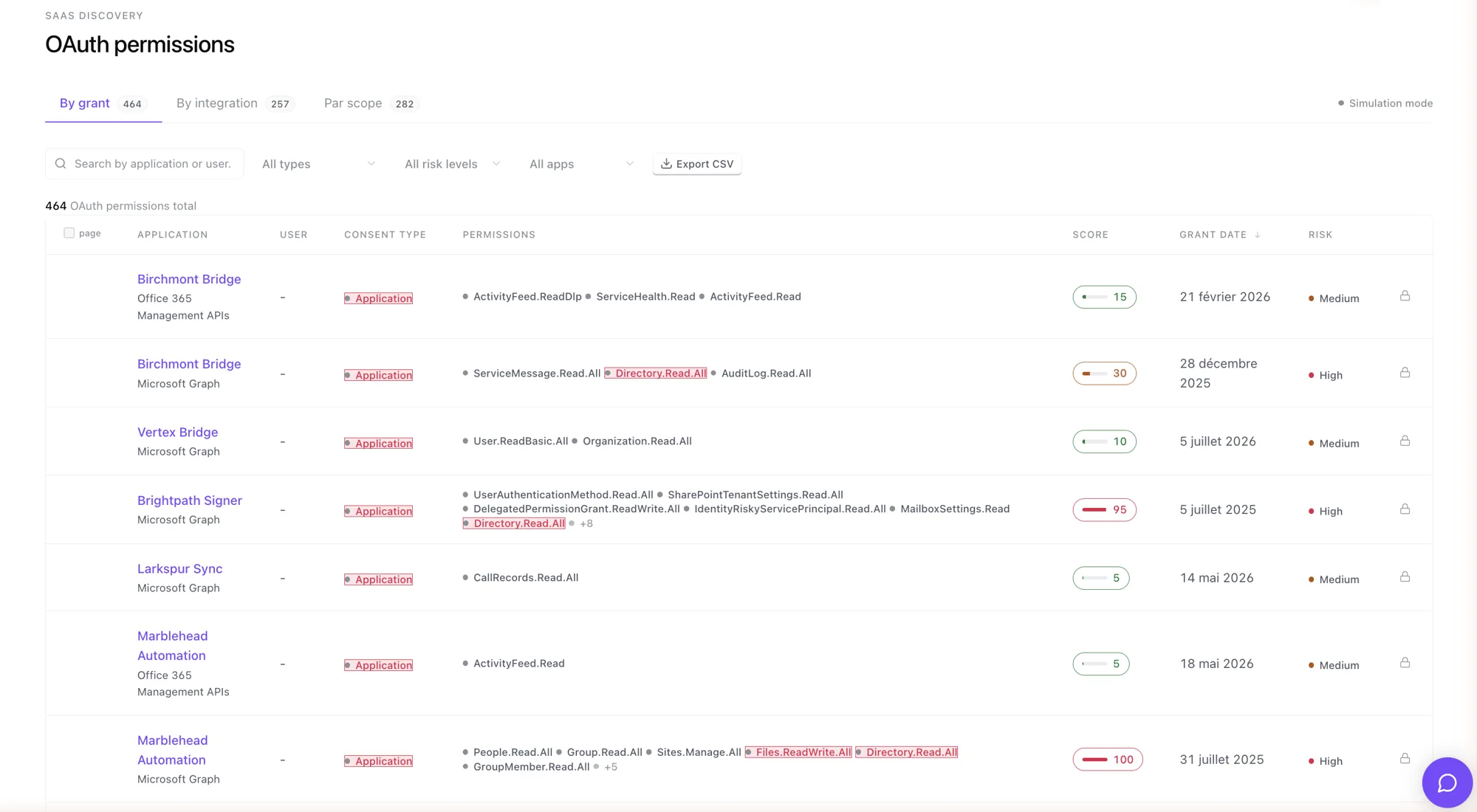
Sorvek automatically inventories every OAuth grant across your SaaS estate and maps the permission scope each one carries. It also surfaces API keys, service accounts, and remote MCP server connections alongside OAuth grants, giving you a complete picture of all programmatic access.
How does Sorvek assess OAuth risk?
Each OAuth connection is scored based on permission scope and data sensitivity. Sorvek flags connections with access to high-value data, including email, files, and code repositories, and surfaces patterns it calls "data highways": connections with unusually broad, persistent access.